
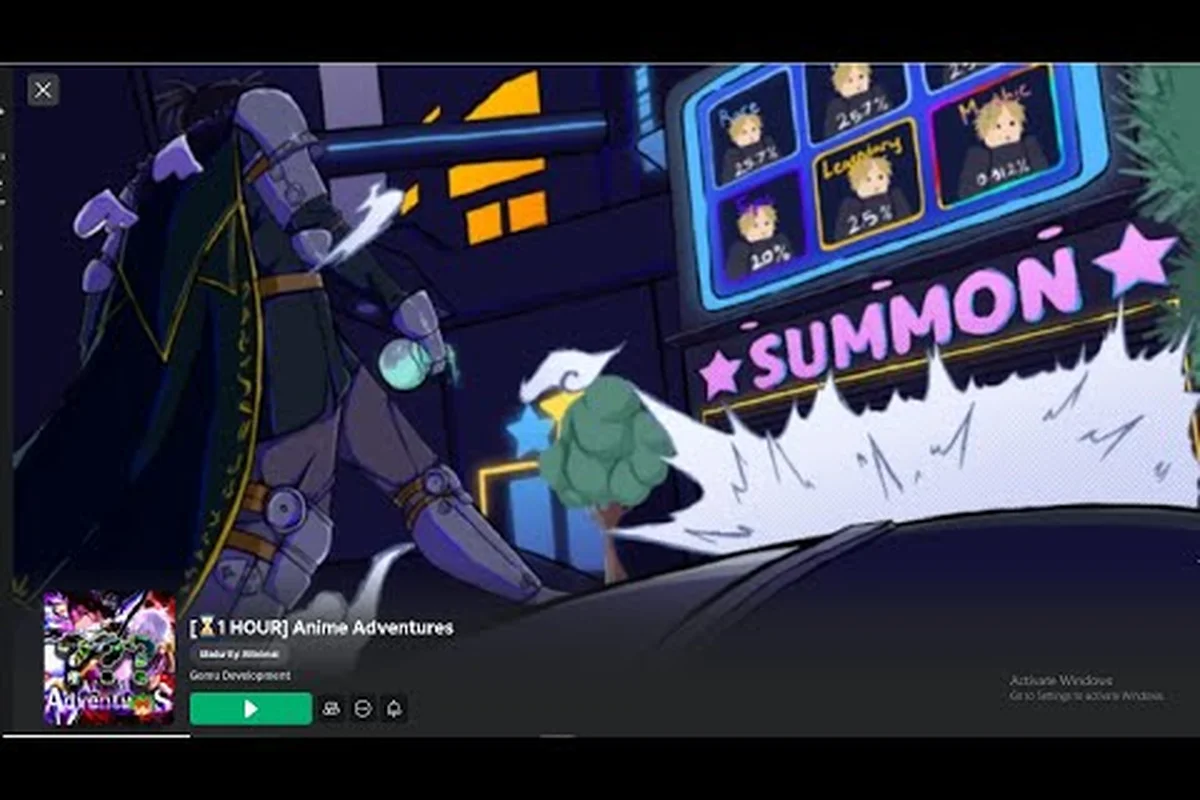
Late game in Anime Adventures is where free players either stall out or pull ahead, and the difference comes down to how you spend gems, materials, and time. This anime adventures late game guide walks through the decisions that actually move your roster forward without spending Robux.
Late-Game Progress Starts With the Right Foundation
The anime adventures late game guide matters because stronger results depend on a clean progression system, not only on collecting more heroes. A focused roster, repeatable income, and deliberate upgrades help you improve without paying Robux, while each new system adds a different way to strengthen your squad.
The official Anime Adventures game page identifies Anime Adventures as a Roblox strategy and tower-defense game by Gomu Development. Its central loop combines character collection, team building, unit leveling, wave defense, and ability unlocking. Those confirmed systems create a practical path for players who want to reach the late game without relying on paid shortcuts.
| Late-game goal | Main systems to prioritize | Why it matters |
|---|---|---|
| Build a dependable squad | Summon, Unit, team composition | Creates a stable foundation for harder content |
| Clear more waves | Placement, wave timing, unit levels | Improves the performance of your current roster |
| Improve damage carriers | Evolution, Limit Break, Relics | Adds community-reported progression layers |
| Expand available resources | Dungeons, Raids, Infinite Mode, events | Creates additional free reward opportunities |
The official page also warns that similarly named games are not affiliated with Gomu Development. That distinction matters when researching this anime adventures late game guide: community systems such as Evolution, Starfruit, Relic, Limit Break, Infinite Mode, and Reroll should be treated as player-reported features unless the developer confirms a change on the official game page.
Build a Focused Roster Before Chasing More Units
A larger collection does not automatically create a stronger team. Because the game uses placement and wave defense, your available units must work together and remain useful when a run becomes difficult. The most reliable approach is to choose one dependable damage unit, maintain a balanced lineup around it, and only expand when a new unit has a clear role.
Community mentions identify Rukia and Fusion Vegeto, but the reviewed sources do not establish a complete roster or a confirmed tier order. Do not build around invented unit names, stat breakpoints, or a numbered best-unit list. Evaluate the characters you actually own by their role, range, compatibility, and ability progression.
| Roster action | Recommended reason | Possible trade-off |
|---|---|---|
| Promote one main damage unit | Concentrates levels, evolution, and upgrades | Fewer flexible replacements if that unit is unavailable |
| Keep a mixed support lineup | Helps the main unit survive longer waves | Uses more roster slots and upgrade resources |
| Add a new unit only when its role is clear | Reduces clutter in the squad | May delay progress toward another upgrade |
| Retire nonperformers gradually | Frees attention from weak placements | Can reduce the number of units available for specific modes |
A practical roster audit is more useful than a rarity-only comparison. Start by identifying which unit repeatedly survives the longest waves, which placements cover the map effectively, and which abilities help the team finish threats before they reach the back line. Because verified damage values and level caps are unavailable, these observed performance checks are the safest basis for decisions.
For additional unit options, the Anime Adventures best secret units overview can help you review what you own without assuming an unsupported ranking. Apply its advice only to characters present in your own collection, then compare them against the role your current squad actually needs.
Use Free Resources Without Robux
An anime adventures no robux guide should focus on repeatable decisions rather than promising a fixed income rate. Gomu Development has not published verified drop tables, reward amounts, summon rates, or level thresholds, so avoid treating community numbers as guaranteed results. The practical advantage of free play comes from completing the appropriate content and reinvesting what it yields.
The official game page mentions gems and a limited unit, but it also states that returning players who missed those rewards will receive them when they are released. That policy makes patience useful: a new player should not spend every gem immediately or assume that missing a launch reward permanently places them behind. Save flexible resources until you understand the progression choices available in the current update.
| Free progression source | Best use of the rewards | Decision rule |
|---|---|---|
| Story waves | Unit levels and ability progress | Keep advancing until a wave consistently becomes difficult |
| Dungeons | Repeatable resource farming | Compare the effort required with the reward you need |
| Raids | Focused group rewards | Join when the activity fits your current team |
| Infinite Mode | Endurance testing and possible rewards | Stop before it becomes inefficient for your goal |
| Limited-time events | Temporary boosts and rewards | Prioritize missions that use content you have mastered |
| Gems and missed rewards | Flexibility for later choices | Avoid premature spending while reward rules remain unclear |
The best use of a free reward depends on your bottleneck. If your main unit cannot clear the current story, level it before farming another currency. If progression has stalled because the team lacks coverage, improve the lineup. If you have enough levels but are missing a permanent upgrade, use dungeons or raids to target that requirement.
For a broader look at repeatable income, use the Anime Adventures gem farming guide to identify sources that fit your available playtime. Validate the current reward rules inside the game, especially when a limited-time event changes the available missions or presentation.
Level Up Fast by Fixing the Real Bottleneck
When players ask about anime adventures how to level up fast, the answer depends on where progress actually stops. Simply replaying easy waves may generate motion without addressing the unit, placement, or reward that is holding the team back. Faster progression comes from identifying the failing stage and selecting the repeatable activity that strengthens that specific need.
Beginner videos reportedly frame the opening session around learning placement and wave timing, which remains relevant after the roster grows. Position the unit before the wave reaches a difficult area, observe which threat survives longest, and adjust rather than immediately adding another character. Once a basic layout is stable, concentrate levels on the unit and ability that produce the clearest improvement.
| Symptom | Likely bottleneck | Better response |
|---|---|---|
| The same enemy reaches the end of the route | Placement or weak coverage | Adjust range and lane coverage before adding levels |
| Damage disappears too quickly | Team protection or ability timing | Improve the damage unit’s survival window |
| The team wins but progress feels slow | Low-value farming | Choose content aligned with the current upgrade |
| Damage improves without visible results | Upgrade spread across too many units | Concentrate resources on the main carry |
| A new mode overwhelms the team | Missing a role or specialized matchup | Review the mode’s recommended composition |
A three-step review helps make this practical. First, reproduce the difficult wave. Second, identify the earliest point where the defense breaks down. Third, change one variable at a time, such as placement, unit selection, or the upgrade priority. This creates cleaner learning than changing the whole squad after every loss.
If leveling is not the only issue, the Anime Adventures progress guide provides a broader framework for deciding where to spend time. Combine that process with this anime adventures late game guide by measuring the result after each completed run and keeping the strategy that produces the most relevant improvement.
Get Stronger Through Layered Upgrades
A useful anime adventures how to get stronger plan separates confirmed mechanics from community-reported progression systems. The official page confirms that players level units to unlock abilities, but the reviewed sources do not provide level caps, damage values, or exact upgrade costs. As a result, the best strategy is to sequence upgrades by their practical effect rather than chase an unsupported numerical threshold.
| Progression layer | Source status | Player decision |
|---|---|---|
| Unit levels and abilities | Officially confirmed | Invest when levels translate into better wave performance |
| Team building | Officially confirmed | Keep a lineup that complements the main damage unit |
| Evolution | Community-reported | Prioritize the unit carrying most runs |
| Limit Break | Community-reported | Check the current game interface before committing resources |
| Relic and Starfruit systems | Community-reported | Use only after confirming what the current version provides |
| Dungeons, Raids, and Infinite Mode | Community-reported | Add them to the progression loop only if they are available and efficient |
| Reroll | Community-reported, unverified | Avoid relying on it without checking the live interface |
The most important decision is upgrade concentration. If levels, Evolution, and Limit Break are spread across an oversized roster, no single character may become dependable. A focused strategy normally produces a better result because your strongest unit receives enough attention to handle more demanding waves, while the rest of the squad supplies protection and coverage.
Do not treat every shiny rarity label as an automatic upgrade. The official thumbnails show Rare and Legendary units, while community guides also mention Mythic, Secret, and Limited. These labels can describe rarity, but the reviewed material does not establish a complete ranked ladder. Compare your own units through practical checks: survivability, useful range, ability contribution, and performance across the content you intend to play.
Make Better Decisions With Limited Information
A late-game plan can become frustrating when every guide appears to offer a definite answer. The fact that no verified level thresholds, stat breakpoints, summon rates, or reward tables are available does not make planning impossible. It changes the method: test the roster, observe the bottleneck, and verify current information before making a high-cost commitment.
| Claim to verify | How to check it | Safe planning response |
|---|---|---|
| A unit is required for a mode | Review the current mission and recommended setup | Treat it as optional until confirmed |
| An upgrade has a fixed cost | Open the live upgrade panel | Plan around the displayed cost only |
| A dungeon gives a guaranteed reward | Complete one run and inspect the result | Do not build a schedule around an unverified amount |
| A community tactic is essential | Reproduce it in your own squad | Keep it only if it produces a clear improvement |
| A new update changes progression | Check the official page and current interface | Wait for confirmation before reallocating everything |
The official game page was created on December 17, 2024, and its research snapshot showed an update on October 4, 2026. Public counters at that time included 323,483 visits, 1,832 favorites, and a 30-player server cap. Those figures describe visibility and server capacity at the snapshot, not progression requirements or player skill, so they should not be used to create performance benchmarks.
For coordinated content, compare your general setup with the Anime Adventures best dungeon team guide. The useful lesson is not a fixed unit list but the need for coverage, dependable damage, and roles that suit the activity. Always confirm whether the current mode has changed before copying a previous squad.
A Repeatable Late-Game Routine
Consistency matters because the late game contains repeatable systems rather than one final check. Use a short session structure that begins with the goal you want to complete, checks the current live interface, performs the most relevant activity, and then reinvests the reward. This prevents resources from becoming scattered across unrelated upgrades.
| Session phase | Action | Purpose |
|---|---|---|
| Review | Check missions, events, and available progression systems | Identify the current bottleneck and confirmed options |
| Test | Attempt the difficult wave or activity | Establish a baseline for the squad |
| Adjust | Change placement, role coverage, or main damage unit | Correct the first visible failure point |
| Invest | Spend earned resources on the selected upgrade | Convert play time into measurable power |
| Farm | Repeat the content that supports the next upgrade | Maintain free progress without unnecessary spending |
| Record | Note the result and the next target | Prevent inefficient farming and preserve a clear plan |
A strong routine also includes weekly review. Check the official page for major changes, compare your performance with the previous session, and remove activities that no longer contribute to your goal. Update 20 was the current confirmed content cycle in the reviewed material, while community coverage was already preparing for Update 21; no dated release or confirmed change list was available, so do not plan around a leaked schedule. The final objective is not to maximize every meter. It is to create a roster that can clear meaningful content, earn free resources, and continue improving without Robux. That makes progress sustainable and gives every upgrade a practical purpose.
Frequently Asked Questions
What is the most important part of an anime adventures late game guide?
The most important part is a repeatable progression loop: identify the squad’s bottleneck, improve the unit or placement responsible for that failure, and reinvest earned rewards. Because verified level thresholds and damage values are unavailable, measured performance is more reliable than following a fixed numerical path that may not fit your roster.
Can I progress in Anime Adventures without spending Robux?
Yes, an anime adventures f2p approach can focus on story progress, dungeons, raids, Infinite Mode, events, and other currently available repeatable activities. The exact rewards and costs are not officially documented in the reviewed sources, so verify each activity in the live interface and prioritize content that directly supports your current upgrade rather than farming without a purpose.
What is the best way to level up quickly in Anime Adventures?
The best method is to level the unit that carries most successful runs, correct placement problems first, and repeat the mission that matches the needed reward. Players searching for anime adventures how to level up fast often gain more by concentrating resources and improving wave performance than by spreading every upgrade across a large collection.
How do I get stronger without relying on rare units?
You can become stronger by improving ability access, team coverage, and the performance of your main damage unit. Rare labels may help, but no verified tier list establishes a universal ranking. Test Rukia or Fusion Vegeto only if you own them, compare their practical contribution with your current squad, and prioritize upgrades that produce a visible improvement in completed runs.
Should late-game players spend every gem immediately?
No. Gems offer flexibility, and the official page says returning players who missed available gems or a limited unit will receive them when released. Save resources until you understand their current purpose, then spend toward the upgrade or roster need that most improves your team instead of reacting to every new reward.